Posted on 11/4/2026
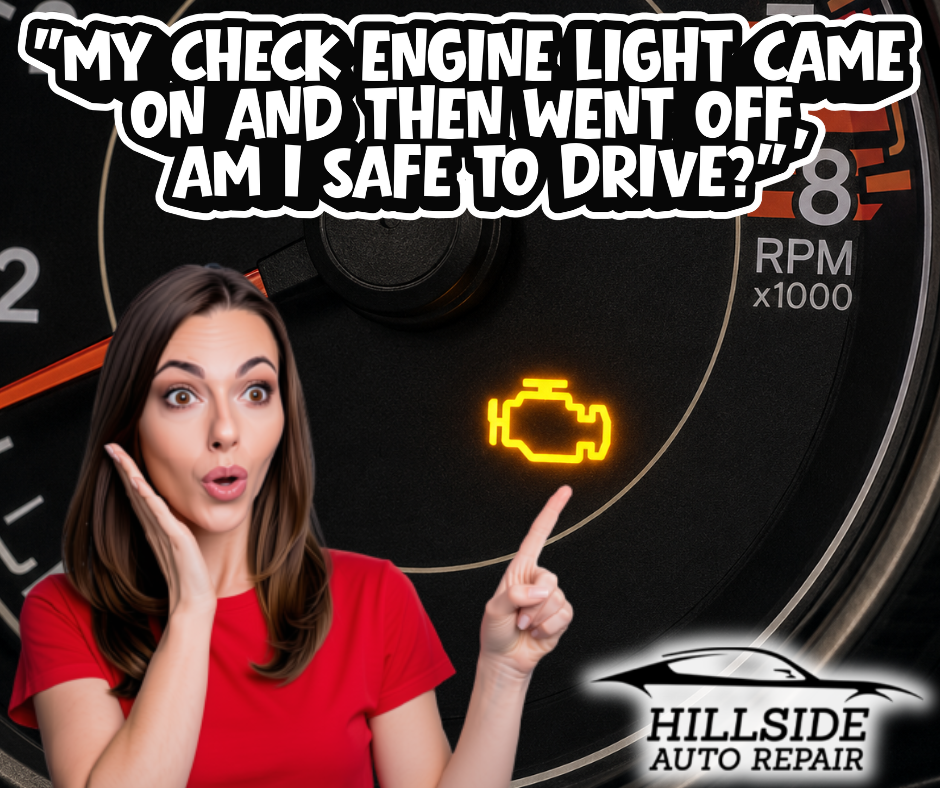
You are driving down I-70, minding your own business, when the dreaded Check Engine Light flickers to life. Your heart sinks. You start mentally calculating repair costs. Then, just as quickly as it appeared, it vanishes. The dashboard is dark, and the car feels fine. So, are you safe to drive? The short answer is that a light which comes on and goes off means the fault was intermittent, but it is still stored in the computer's memory and should be diagnosed. It is a warning shot and we want to make sure you do not ignore it. The Ghost in the Machine: Why Intermittent Faults Happen A check engine light that comes on and then goes off means the system detected a fault, but the condition that caused it has not repeated enough times to keep the light illuminated. The code is still stored in the module's memory and freeze frame data records the exact conditions when the fault occurred. This data is like a snapshot of your engine's vitals at the moment of the g ... read more
Posted on 11/3/2026

A Wallet-Draining Disaster We know life gets busy here in O'Fallon, and it is tempting to put off a small repair. However, the short answer to what happens if you ignore a small coolant leak is simple: you risk turning a $300 repair into a $4,000+ engine replacement. It is the difference between a minor inconvenience and a major financial headache that can ruin your week. When we see a customer hesitate at the front desk over a small leak, we want to explain exactly why that drip is a warning shot from your engine. Ignoring it does not make it go away; it only gives the problem time to grow into something catastrophic. Why "Small" Becomes "Catastrophic" Coolant leaks do not get better on their own; they are relentless. A seeping water pump, a cracked thermostat housing, or a pinhole in a hose loses coolant slowly at first. You might not even notice a puddle in your driveway. But on a long highway drive, perhaps heading out of t ... read more
Posted on 11/2/2026
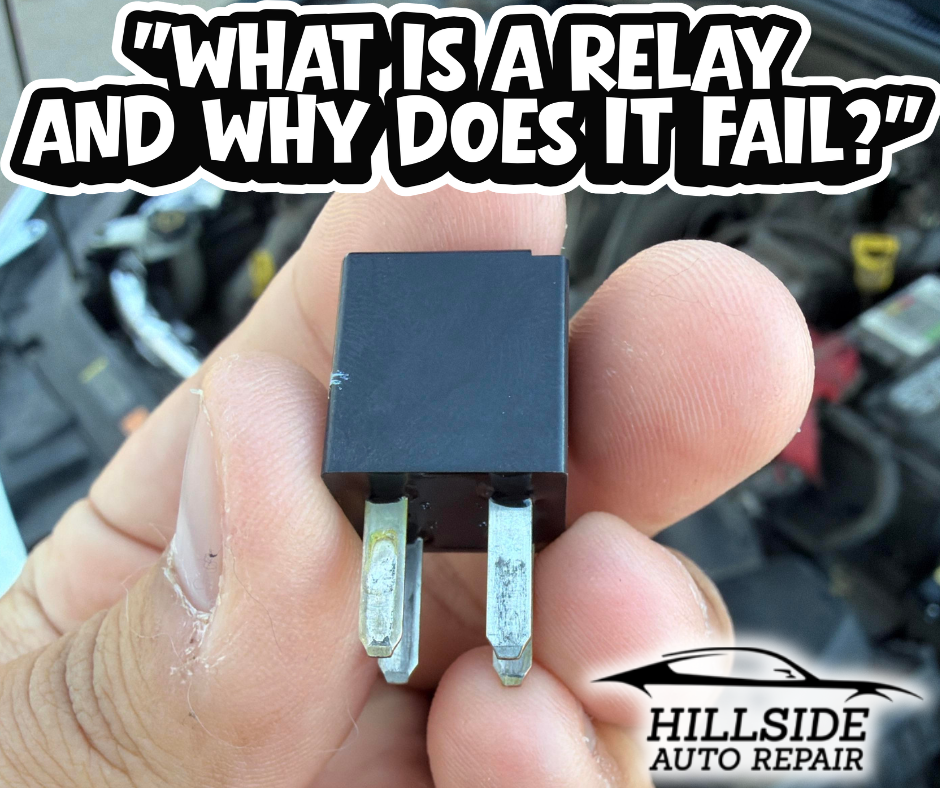
The Tiny Switch That Runs Your Car If you have ever flipped a light switch in your home, you understand the basic idea behind a relay. It is a switch, but instead of your finger doing the flipping, electricity does the work. In your vehicle, relays are everywhere. They hide under the hood, behind the dash, and in fuse boxes you may never have noticed. At Hillside Auto Repair, we see relays controlling everything from your fuel pump to your headlights to your cooling fans. They are small, inexpensive, and absolutely critical. When one fails, the symptoms can be baffling. A car that will not start or a fan that will not spin often sends drivers in O'Fallon searching for a major mechanical problem when the real culprit is a tiny switch the size of a matchbox. How a Relay Actually Works A relay is an electromagnetic switch that lets a low-current circuit control a high-current load. Inside the relay housing, a small coil of wire creates a magnetic fie ... read more