Posted on 4/28/2026
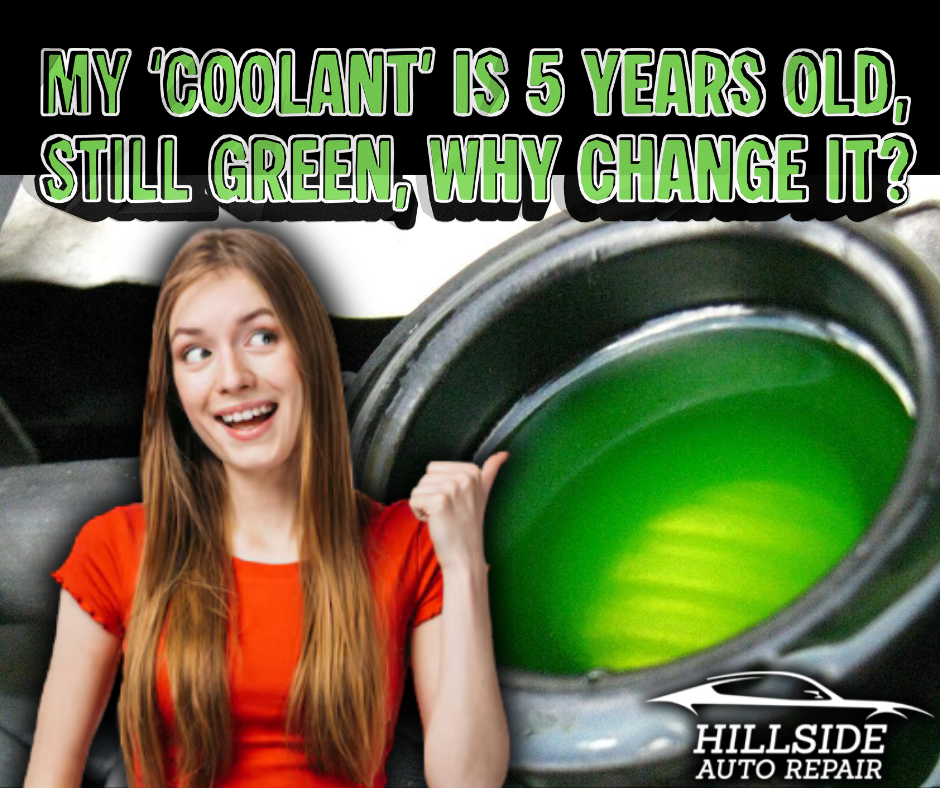
You have probably popped the hood on your car here in O’Fallon, taken a look at the coolant reservoir, and thought to yourself, “It is still green. Looks clean. Why would I pay to change that?” We hear this question almost every week at Hillside Auto Repair. And on the surface, your logic makes perfect sense. We are taught that fresh equals green or pink or orange, and old equals brown, rusty, or murky. But when it comes to coolant, that bright green color is one of the biggest lies your car will ever tell you. Let us explain why keeping that five-year-old green coolant is a gamble you do not want to take on Brentwood Boulevard or during a cold snap on I 64. The Dye Lasts. The Protection Does Not. That vibrant green hue you see is simply dye. Dye does not wear out. Dye does not care if your engine is overheating or if your radiator is turning into a science experiment. The actual working ingredients in your coolant are corrosion inhibitors ... read more
Posted on 4/27/2026
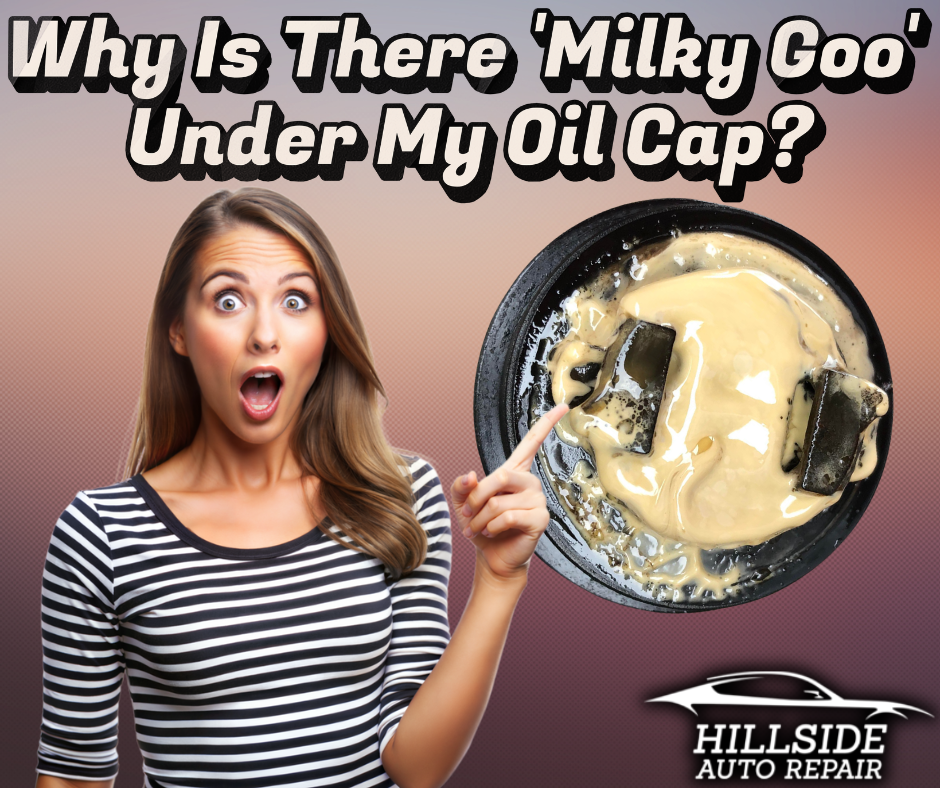
Why Is There "Milky Goo" Under My Oil Cap – Is My Head Gasket Blown? We have all been there. It is a normal morning, you pop the hood to check your oil or top off the washer fluid, and your heart sinks. You twist the oil cap off and find a disgusting, frothy substance that looks like a melted vanilla milkshake or yellow mayonnaise coating the underside of the cap. Your stomach drops as the internet's scariest diagnosis flashes before your eyes: a blown head gasket. Before you start mentally calculating the cost of a new engine, take a deep breath. At Hillside Auto Repair, we want you to know that this discovery is not always a mechanical death sentence. In fact, during the colder months here in Missouri, we see this "milky goo" so often that it rarely raises our blood pressure anymore. Let us explain the chemistry behind this ugly mess and when it is time to actually panic. The Science of the Sludge: Condensation, Not Catastrophe ... read more
Posted on 4/21/2026
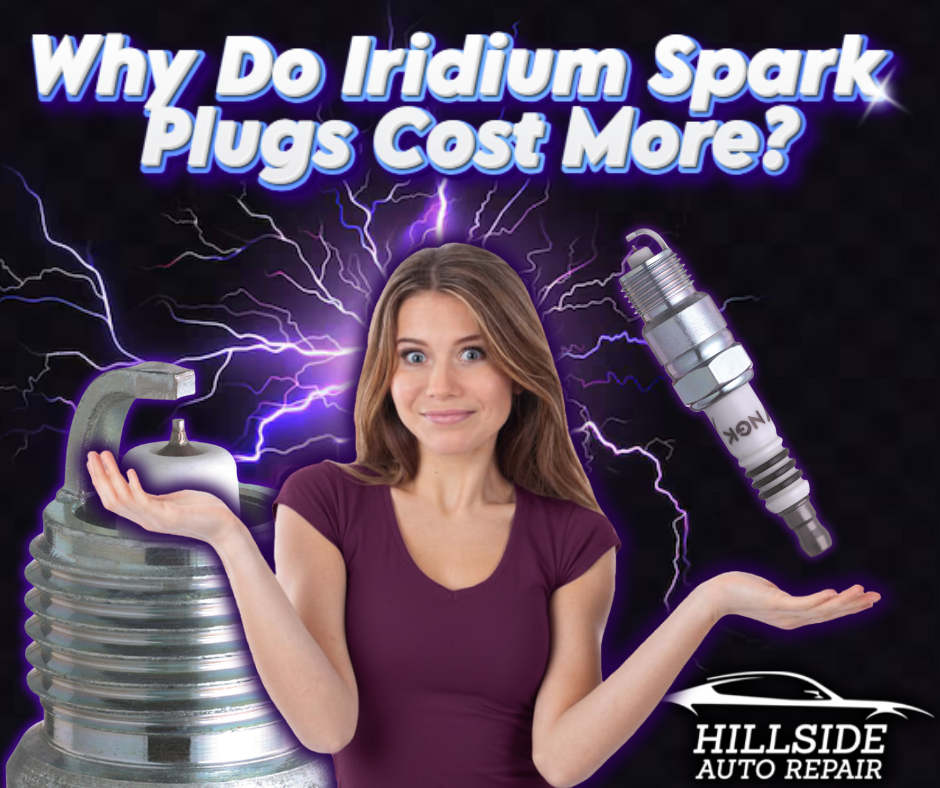
Why Do Iridium Spark Plugs Cost More? Are They Worth It? Let us be honest with you, neighbors of O’Fallon. When you hear the price of a tune up that includes iridium spark plugs, the first reaction is often a little bit of sticker shock. You might think, “It is just a spark plug. Why does it cost three times as much as the old copper one?” We get that question a lot at Hillside Auto Repair. With the constant stop and go traffic on Highway K and the strain of those humid Missouri summers, your vehicle’s ignition system works hard. So, let us break down the science and the savings. Are iridium plugs actually worth the extra cash? The short answer is yes, but we want you to understand exactly why. The Material Matters The price difference starts with the metal itself. Iridium is one of the densest and most corrosion resistant metals on the planet. It has a melting point over 4,000 degrees Fahrenheit. Compare that to standard copp ... read more
Posted on 4/20/2026

Missouri Potholes Hate Your MPG: Why Alignment Is Your Secret Weapon for Efficiency Let us tell you a story that every driver in O’Fallon knows by heart. You are cruising down Highway K, maybe turning onto Bryan Road, or just trying to get through the parking lot at the Meadows. Then you see it. That dark, jagged crater in the asphalt that looks like the moon decided to visit Missouri. Thump. Crash. Your coffee spills, your teeth rattle, and somewhere in the mechanical soul of your car, a silent promise breaks. We are talking about potholes. And here in O’Fallon, they are not just a seasonal annoyance. They are a direct assault on your wallet. At Hillside Auto Repair, we see the aftermath every single day. But what most drivers do not realize is that every time you wince after hitting a pothole, you are also watching your fuel efficiency drain away. Missouri potholes hate your MPG, and a bad alignment is how they win. The Hidde ... read more
Posted on 4/15/2026
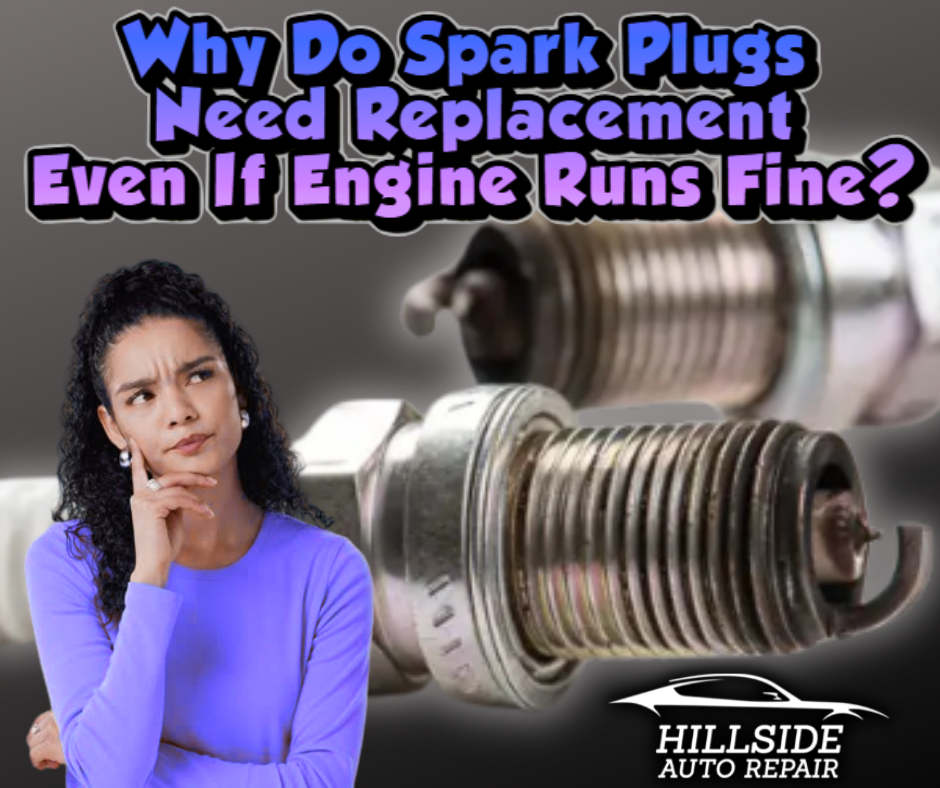
Why Do Spark Plugs Need Replacement – Even If Engine Runs Fine? You are cruising down Highway K near Dardenne Park. The engine is humming. The air conditioning is blasting. Everything feels perfect. So why would a mechanic tell you that your spark plugs are due for replacement? It seems like a cash grab, right? At Hillside Auto Repair in O’Fallon, Missouri, we hear this question almost every day. The truth is that your engine is a master of deception. It can hide its pain for thousands of miles. By the time you feel a problem, you have already lost money at the gas pump and put unnecessary strain on expensive ignition components. Let us pull back the curtain on why scheduled spark plug replacement is the smartest money you will spend this year. The Silent Breakdown: Electrode Wear Your spark plug is a simple device. It sends a bolt of lightning into the cylinder to ignite fuel. But that bolt jumps between two pieces of metal: the center e ... read more