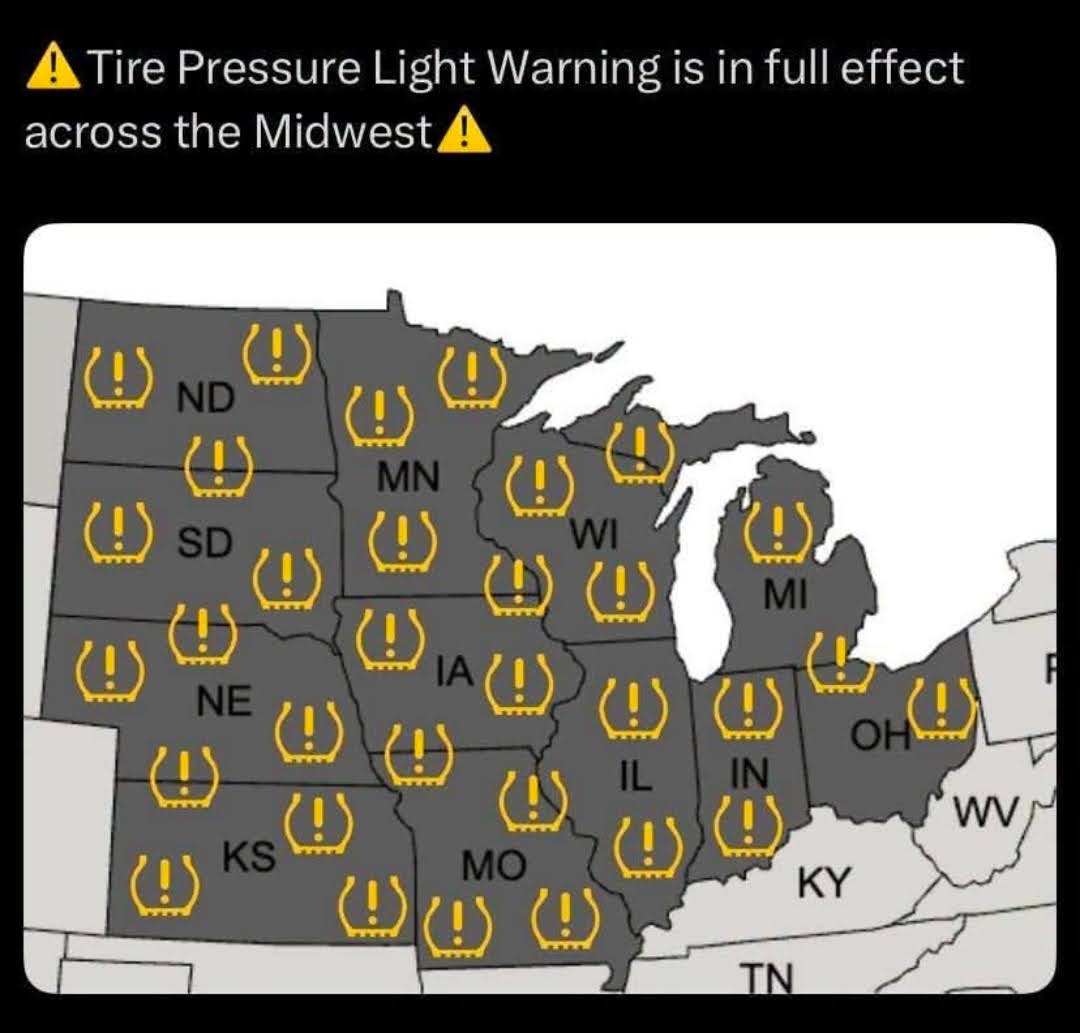
The Great Midwest Tire Pressure Panic
If you are driving around O’Fallon, Missouri, this October and suddenly notice your tire pressure warning light glowing on the dashboard, you are not alone. Across the Midwest, the first real taste of autumn weather has a way of turning perfectly ordinary morning commutes into unexpected encounters with that little yellow tire-shaped symbol. One day, the weather is mild enough for a comfortable drive with the windows cracked. The next morning, a cold front rolls through St. Charles County, temperatures drop overnight, and your dashboard lights up like it is trying to tell you something important. The good news? This is a common seasonal occurrence. The important part is understanding why it happens, what your warning light means, and when it is time to have your tires checked by a professional.
At Hillside Auto Repair, we have been helping drivers in O’Fallon and the surrounding communities navigate changing seasons and unexpected automotive problems since 1985. When Missouri weather starts messing with your tire pressure, we are here to help you separate a normal temperature-related pressure drop from a problem that needs attention.
Cold Air, Lower Pressure: The Science Behind the Light
Here is the science behind your seasonal dashboard surprise. Air contracts as it cools, which means the air inside your tires exerts less pressure when temperatures fall. As the weather warms up, tire pressure can rise again. Your tires are not necessarily losing air through a puncture. Sometimes, they are simply responding to the changing temperature outside. As a general rule, tire pressure changes by approximately 1 PSI for every 10-degree Fahrenheit change in temperature. That means a tire that was properly inflated during a warm afternoon in September could fall below the manufacturer's recommended pressure after an overnight October cold front. For example, if your tires were inflated to 35 PSI when temperatures were around 70 degrees, a drop to 30 degrees could reduce pressure by roughly 4 PSI under comparable conditions. That is enough to trigger a tire pressure monitoring system, commonly called a TPMS, on many vehicles. The takeaway? A sudden drop in temperature can cause a tire pressure warning light to appear even when your tires were properly inflated just a few days ago.
Why You are Seeing It Everywhere Right Now
Missouri weather rarely follows a predictable script. Around O’Fallon, St. Peters, Wentzville, and the greater St. Charles County area, October can bring warm afternoons, chilly nights, gusty winds, and sudden cold fronts within the same week. Those temperature swings matter because tire pressure is affected by the temperature of the air inside the tire, not just the temperature displayed on your phone. Your vehicle may sit outside overnight in a driveway or parking lot, allowing its tires to cool significantly. When you start your morning commute, the pressure may be low enough to trigger the warning light. Then, after driving for a while, your tires warm up and the pressure may increase. The warning light might go out on some vehicles, or it may remain illuminated until the system detects that pressure has returned to the appropriate range. Some vehicles also require a short drive before the monitoring system updates. That does not mean you should ignore the warning just because it disappears later. A light that comes on during a cold morning is a good reason to check your tire pressure rather than assume everything will sort itself out.
Your TPMS Light Is More Than Dashboard Decoration
Your tire pressure monitoring system is designed to alert you when one or more tires may be significantly underinflated. Depending on your vehicle, the system may display a warning light, identify an individual tire, or provide actual pressure readings through the vehicle's information display. Proper tire pressure affects much more than whether your dashboard looks happy. Underinflated tires can increase rolling resistance, reduce fuel efficiency, contribute to uneven tread wear, and affect steering, braking, and handling. In wet weather, these problems can become particularly concerning. Here in Missouri, October also brings rain, fallen leaves, slick pavement, and the occasional early-season frost. That combination makes tire condition especially important. Correct pressure helps your tires perform as designed, giving them the best chance to maintain proper contact with the road. Your TPMS light is not something to cover with a piece of tape or mentally file under "I'll deal with it later." It is your vehicle's way of asking you to check an important safety system.
How to Check Your Tire Pressure the Right Way
When the warning light comes on, start by checking your tire pressure when the tires are cold. Ideally, that means before driving or after the vehicle has been parked for several hours.
- Find the recommended tire pressure on the placard inside the driver's doorjamb or in your owner's manual. Use that number as your guide, not the maximum pressure molded into the tire's sidewall. The sidewall figure is not the same as the vehicle manufacturer's recommended operating pressure.
- Use a reliable tire pressure gauge to check all four tires, even if the dashboard suggests that only one is low. Do not forget the spare if your vehicle has a full-size spare equipped with a monitoring sensor or if its condition matters for your planned driving.
- Add air as needed to reach the recommended cold pressure. If you have been driving and the tires are warm, avoid letting air out simply because the pressure reading is higher than expected. Tire pressure naturally rises as tires warm up.
- If you are unsure how much air your tires need, or you do not have a dependable gauge or air source, our team at Hillside Auto Repair can help you determine what is going on.
When Low Tire Pressure Is More Than a Weather Problem
Temperature changes explain many October tire pressure warnings, but they do not explain every warning. A nail, screw, damaged valve stem, leaking bead, wheel damage, or another issue can cause a tire to lose air. Pay attention to what happens after you inflate your tires. If the warning returns repeatedly, one tire keeps losing pressure, or you notice a visibly low tire, you may have a leak that needs professional attention. Also, look for warning signs such as a tire that appears unusually soft, a vehicle that pulls to one side, vibration, or a sudden change in handling. If a tire is visibly flat, severely underinflated, or damaged, do not continue driving on it. Pull over somewhere safe and arrange appropriate assistance. Driving on a severely underinflated tire can cause damage that cannot be fixed with a simple air top-off.
One additional detail worth knowing: on many vehicles, a TPMS light that flashes and then remains illuminated can indicate a monitoring-system malfunction rather than simply low tire pressure. The exact behavior varies by manufacturer, so your owner's manual and a proper diagnostic check are the best next steps.
At Hillside Auto Repair, we look beyond the warning light to help identify the actual cause. That means addressing the problem instead of repeatedly treating the symptom.
Why Ignoring the Light Can Cost You More
A few pounds of pressure might not seem like a big deal, especially when the warning appears every time the weather gets cold. However, consistently driving on underinflated tires can shorten tire life and increase the risk of tire damage. Underinflation can cause excess heat buildup, place additional stress on tire sidewalls, and accelerate wear along the outer edges of the tread. It can also increase fuel consumption because the tires require more energy to roll. Consider the cost of replacing tires prematurely, dealing with poor handling, or discovering a preventable tire problem during an already inconvenient commute. Checking tire pressure is a small maintenance task that can help prevent larger headaches. If you are topping off your tires every few days, do not keep treating the air compressor like your permanent solution. Find out why the pressure is dropping. Seasonal temperature changes may be part of the explanation, but a persistent loss of pressure deserves a closer look.
Why Hillside Auto Repair Is O’Fallon’s Trusted Choice
When it comes to your vehicle, you deserve more than a quick guess and a shrug. You deserve an automotive repair shop that takes the time to understand the problem, explain your options, and help you make an informed decision. At Hillside Auto Repair, The Professionals You Can Trust in O’Fallon since 1985, we have built our business around providing dependable automotive service to our community. We understand that drivers rely on their vehicles to get to work, transport their families, manage daily responsibilities, and travel safely through Missouri's unpredictable seasons. Our comprehensive auto repair services cover a wide range of automotive needs, from minor fixes to major overhauls. Our technicians use the same types of tools and equipment found at dealerships, helping us diagnose and service today's vehicles with professional-grade capabilities. Whether your concern involves tire pressure, a dashboard warning, routine maintenance, or a more complex mechanical issue, we work to identify the cause and recommend the appropriate repair. We believe that clear communication, quality workmanship, and dependable service should be part of every visit.
More Than Repairs: Complete Automotive Care
Your vehicle is made up of interconnected systems, and keeping it reliable takes more than responding to warning lights when they appear. That is why we offer multiple system maintenance services to help drivers stay ahead of preventable problems. Routine maintenance can help protect your investment, support dependable performance, and identify developing concerns before they become more expensive repairs. Depending on your vehicle's age, mileage, manufacturer recommendations, and driving conditions, this may include fluid services, brake maintenance, cooling system service, battery and charging system checks, and other scheduled maintenance. We also stand behind the services we provide with a 3-year/36,000-mile warranty. That commitment gives our customers additional peace of mind and reflects our focus on delivering service they can feel confident about. Warranty terms and applicable exclusions may vary by service, so our team can explain the details for your particular repair. When you bring your vehicle to Hillside Auto Repair, you are choosing a team that can help you address today's concern while keeping an eye on the bigger picture of your vehicle's maintenance needs.
Let the Professionals Handle the Pressure
October's cold fronts are a normal part of life in O'Fallon, but a tire pressure warning light should never be dismissed without checking the actual pressure. Cooler air can lower PSI, while punctures, leaks, and TPMS problems can create similar warnings for very different reasons. At Hillside Auto Repair, we help drivers understand what their vehicles are telling them and provide comprehensive automotive service backed by professional equipment, experienced technicians, and a 3-year/36,000-mile warranty on services we provide. We have been serving O'Fallon since 1985, and we are proud to be The Professionals You Can Trust. When Missouri weather puts the pressure on your tires, let us help you get back to driving with confidence.
Remember: October may be putting the pressure on, but your tires should not have to go through an identity crisis every time a cold front rolls in. Trust your vehicle to Hillside Auto Repair.