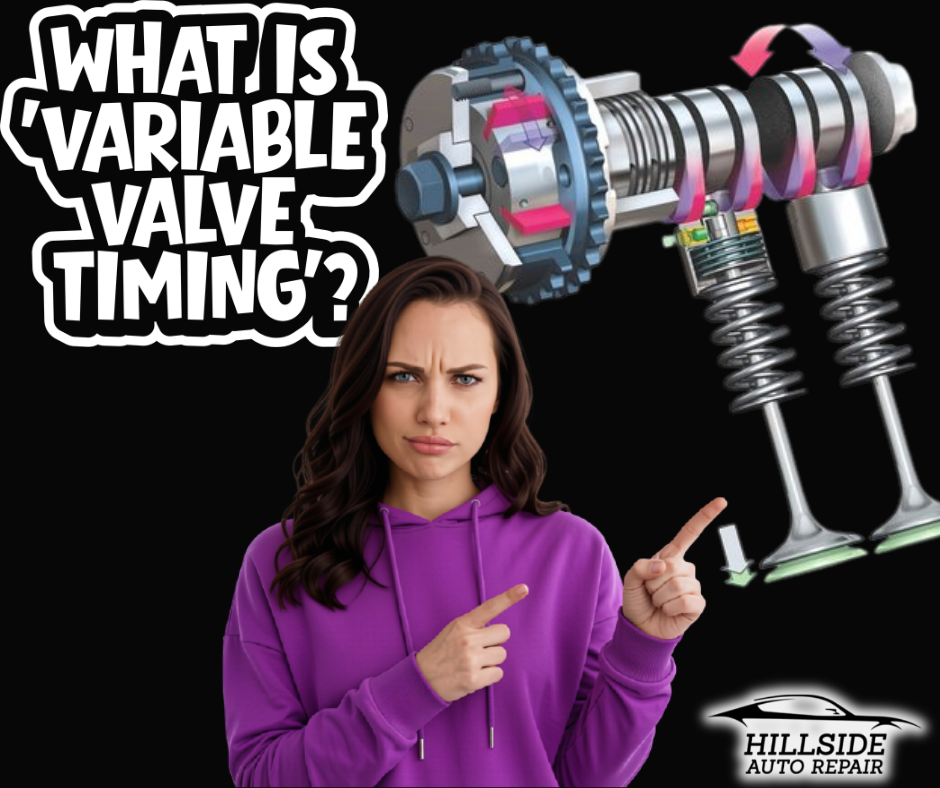
The Hidden Puppeteer: How Variable Valve Timing and Oil Pressure Shape Your Engine's Personality
The Symphony Under Your Hood
Every time you press the accelerator in your vehicle, you are conducting an orchestra of mechanical precision that most drivers never stop to appreciate. Among the most fascinating innovations in modern engine design is Variable Valve Timing, a technology that has quietly revolutionized how engines breathe, perform, and consume fuel. Here at Hillside Auto Repair in O'Fallon, Missouri, we have watched this technology evolve from a exotic novelty to an essential component in nearly every new vehicle that rolls through our shop doors. Understanding Variable Valve Timing is not just for gearheads and engineers. It matters to anyone who wants to understand why their engine feels sluggish some days and spirited on others, and why maintaining proper oil pressure is absolutely critical to keeping that personality intact.
Breathing Lessons: The Basics of Valve Timing
To understand Variable Valve Timing, you first need to understand what valves do in your engine. Your engine is essentially a giant air pump. It pulls in air and fuel, compresses the mixture, ignites it, and pushes out exhaust gases. Valves are the doors that let air in and exhaust out at precisely the right moments. In older engines, these valves opened and closed at fixed intervals determined by the shape of the camshaft. This meant engineers had to choose between an engine tuned for low-end torque or one tuned for high-rpm horsepower. You could not have both. Variable Valve Timing changed everything by allowing the engine's computer to adjust when those valves open and close, how long they stay open, and even how far they lift. This adaptability means your engine can be fuel-efficient during a leisurely cruise down Highway K and transform into a responsive powerhouse when you merge onto Interstate 70.
Oil Pressure: The Hydraulic Muscle Behind the Magic
Here is where things get truly interesting and where many drivers get caught off guard. Most Variable Valve Timing systems rely on engine oil pressure to function. The engine's computer sends signals to a solenoid that controls the flow of oil into a special actuator mounted on the camshaft. This oil pressure physically rotates the camshaft relative to the timing chain or belt, changing when the valves open. No oil pressure means no Variable Valve Timing. Dirty oil means sluggish or erratic Variable Valve Timing. Low oil levels mean the system cannot build enough pressure to do its job. When your oil is overdue for a change or your oil level is low, you are not just risking engine wear. You are literally robbing your engine of its ability to adapt and perform. That hesitation you feel when accelerating might not be a transmission problem. It could be your Variable Valve Timing system starving for clean, pressurized oil.
When Your Engine Loses Its Personality
A failing Variable Valve Timing system often announces itself in subtle ways before becoming a serious problem. You might notice a rough idle that feels like the engine is struggling to find its rhythm. You might experience a noticeable lack of power at certain RPM ranges, as if the engine forgot how to breathe properly. Some drivers report a rattling or ticking noise from the front of the engine, especially on cold starts. Others see the dreaded check engine light accompanied by codes related to camshaft position or timing over-advanced or over-retarded. In some cases, fuel economy drops noticeably because the engine can no longer optimize its breathing for efficiency. Ignoring these symptoms can lead to catastrophic damage. If a camshaft actuator fails completely or a timing chain jumps, you could be looking at bent valves and a repair bill that makes a simple oil change look like pocket change. Here at Hillside Auto Repair, we have seen far too many O'Fallon drivers learn this lesson the hard way.
Why Hillside Auto Repair Is Your Trusted Partner
Since 1985, Hillside Auto Repair has been the trusted name in O'Fallon, Missouri for comprehensive automotive care. We are not just a shop that changes oil and swaps brake pads. We offer comprehensive auto repair services, and our technicians are equipped to handle a wide range of repairs, from minor fixes to major overhauls. We use the same tools and equipment that the dealership does, which means your vehicle receives dealership-level diagnostics and service without the dealership-level prices or hassle. We also offer multiple other system maintenance services to keep your vehicle running at its best. Whether you need a diagnostic scan to pinpoint a Variable Valve Timing issue, a transmission service, a cooling system flush, or a complete engine inspection, we have the expertise and the technology to get the job done right. We carry a 3-year/36,000-mile warranty for all services we provide, because we stand behind our work and we want you to drive away with confidence.
Adaptive Cruise Control: The Hidden Cost on Your Brakes
While we are discussing how modern technology affects your vehicle, let us talk about Adaptive Cruise Control. This convenient feature uses radar sensors to maintain a safe distance from the car ahead, automatically adjusting your speed and applying the brakes when necessary. While this sounds like a wonderful innovation, and it is, it comes with hidden costs that many drivers do not consider. Adaptive Cruise Control causes increased brake pad wear because the system is constantly making small, calculated brake applications that a human driver would not make. Over time, these micro-braking events add up, wearing down your pads faster than traditional cruise control ever would. Additionally, if your vehicle needs windshield replacement or bumper repair, the radar sensors often require recalibration. This radar calibration is not a simple plug-and-play procedure. It requires specialized equipment and expertise, and it can add hundreds of dollars to what used to be a straightforward repair. Here at Hillside Auto Repair, we want O'Fallon drivers to understand these costs so they can budget accordingly and make informed decisions about their vehicle maintenance.
The Bottom Line for O'Fallon Drivers
Your vehicle is a complex network of systems that all depend on one another. Variable Valve Timing depends on clean, pressurized oil. Adaptive Cruise Control depends on properly calibrated radar sensors. Your brakes depend on regular inspection and timely replacement. Neglecting any one of these systems can lead to cascading failures that affect your safety, your wallet, and your driving experience. At Hillside Auto Repair, we believe in empowering our customers with knowledge and providing them with honest, reliable service they can trust. We have been serving O'Fallon since 1985, and we plan to be here for many years to come, keeping your vehicle running smoothly and safely. Whether you are dealing with a mysterious engine hesitation, curious about your brake wear, or simply due for routine maintenance, we are here to help. Our team uses the same tools and equipment that the dealership does, we offer a 3-year/36,000-mile warranty on all services, and we treat every vehicle as if it were our own. So the next time your engine seems to have lost its spark, or your brakes are squeaking louder than your kids on a long road trip, give us a call. We promise not to talk down to you, and we promise not to recommend anything your vehicle does not actually need. After all, trust is built one honest repair at a time, and we have been building it for nearly four decades.