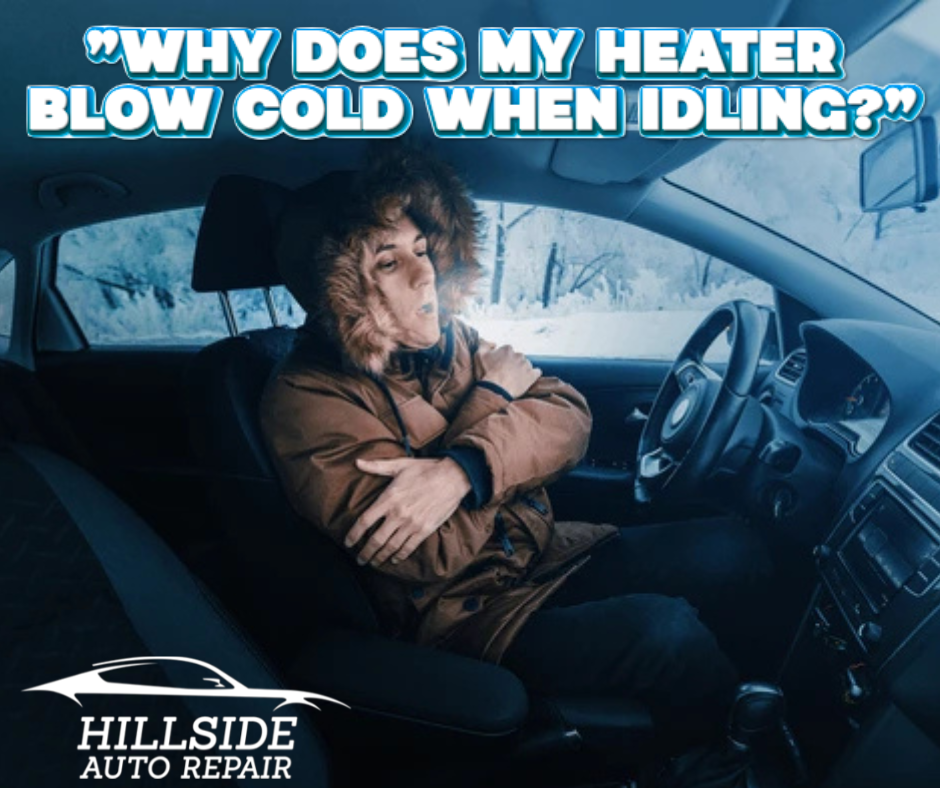
There is a special kind of frustration that comes with winter in O'Fallon. You brave the cold, scrape the ice off your windshield, and finally settle into your car. You crank the heater, and within a few minutes, a glorious wave of warm air rewards your patience. But then, you hit it. The dreaded stoplight on Highway K. As you sit there idling, waiting for your turn to get through the intersection, something changes. The warm, comforting air slowly fades, replaced by the unwelcome chill of late December. As soon as the light turns green and you accelerate, the warmth returns, only to disappear again at the next light on Mexico Road.
If this scene feels all too familiar, you are not alone. It is one of the most common, and most perplexing, cold-weather complaints drivers face. At Hillside Auto Repair, we field calls about this issue every winter. The good news? It is your car’s way of telling you something is wrong. The bad news? Ignoring it could leave you stranded in the freezing cold. Let’s crack open the hood (metaphorically, it's cold out there) and diagnose why your ride is giving you the cold shoulder at idle.
The Heart of the Matter: Coolant Flow
First, a quick anatomy lesson. Your car’s heater doesn’t create its own hot air. It steals it. The system uses a small radiator called a heater core, located deep inside your dashboard. Hot engine coolant flows through this core, and a blower fan pushes air over it, sending warmth into the cabin.
For this to work, the heater core needs a constant, steady supply of scorching hot coolant. When you are stopped and the engine is idling, everything slows down, including the water pump. At low RPMs, the pump circulates coolant at its minimum capacity. This is usually enough to keep the cabin toasty in a healthy system. But if there is an underlying issue, that low-speed flow is the first thing to fail. Here are the three most likely culprits.
Low Coolant Level: The Prime Suspect
This is the most common cause of "no heat at idle," and it is exactly as simple as it sounds. If your coolant level is just a little low, the water pump might still push enough fluid through the engine to keep it from overheating while driving. However, at idle, the pump can't generate enough pressure to lift the coolant up and into the heater core, which is often one of the highest points in the cooling system.
Think of it like a drinking straw in an almost-empty glass. When you suck hard (like the pump at high speed), you get a sip. But when you sip gently (idle), you get nothing but air.
The Fix: Check your coolant reservoir when the engine is completely cold. If it is below the "Low" mark, topping it off might solve your problem instantly. However, if it keeps running low, you have a leak that needs professional attention.
The Idle Water Pump Workout
The water pump is the heart of your cooling system. It is responsible for keeping that vital coolant flowing through the engine block, radiator, and heater core. As we mentioned, the pump spins slower when you are idling.
If the water pump is failing, say the impeller (the little fins that push the water) is worn out, corroded, or loose on its shaft, it might not have the efficiency to push coolant at low speeds. It is like trying to fan yourself with a worn-out newspaper; you have to move your arm really fast to feel any air. When you slow down, the airflow stops.
The Fix: A weak water pump is a time bomb. If it fails completely, you will overheat fast. This requires a professional diagnosis and replacement.
The Closed Heater Control Valve
On many vehicles, the flow of hot coolant to the heater core is controlled by a heater control valve. This valve is designed to open and close, usually to help the air conditioning system work better or to maintain a precise cabin temperature.
If this valve gets stuck closed or the vacuum line that controls it fails, it will physically block the hot coolant from reaching the heater core. When you rev the engine, the change in vacuum pressure or the sheer force of the fluid might jiggle it open slightly, letting a little heat through. But at idle, it snaps shut, leaving you shivering.
The Fix: This is not a component you can usually fix with a can of parts-store magic. It needs to be tested and replaced by a skilled technician.
Why Guessing Games Cost More in the Long Run
When your car starts acting up in the O'Fallon cold, it is tempting to throw parts at the problem. You might buy a new thermostat, a bottle of stop-leak, or a jug of coolant, hoping for a cheap fix. But misdiagnosing a cooling system issue can lead to a much bigger headache, and bill, down the road.
That is where we come in. At Hillside Auto Repair, we don't guess; we diagnose. Located right here in O'Fallon, MO, our team has been keeping our neighbors on the road for 35 years. We understand the specific demands placed on your vehicle by our Missouri winters.
When you bring your chilly car to us, we use the same top-tier diagnostic tools and equipment found at any dealership to pinpoint the exact cause of your problem. Whether it is a simple coolant flush, a complex water pump replacement, or a finicky heater control valve, our ASE-certified technicians have the experience to handle it right the first time.
We are a full-service shop, meaning we can take care of whatever we find, from minor fixes to major overhauls. And because we stand behind the quality of our work, every service we provide is backed by our comprehensive 3-year/36,000-mile in-house warranty. That is our promise to you.
Don't Spend Another Cold Day Shivering
A heater that blows cold at idle is more than just an annoyance; it is a cry for help from your vehicle. Don't let a small problem turn into a breakdown on a freezing day.
If your car is playing games with the temperature, give the trusted professionals at Hillside Auto Repair a call or schedule your appointment online today. We will get your heat, and your peace of mind, back where it belongs.