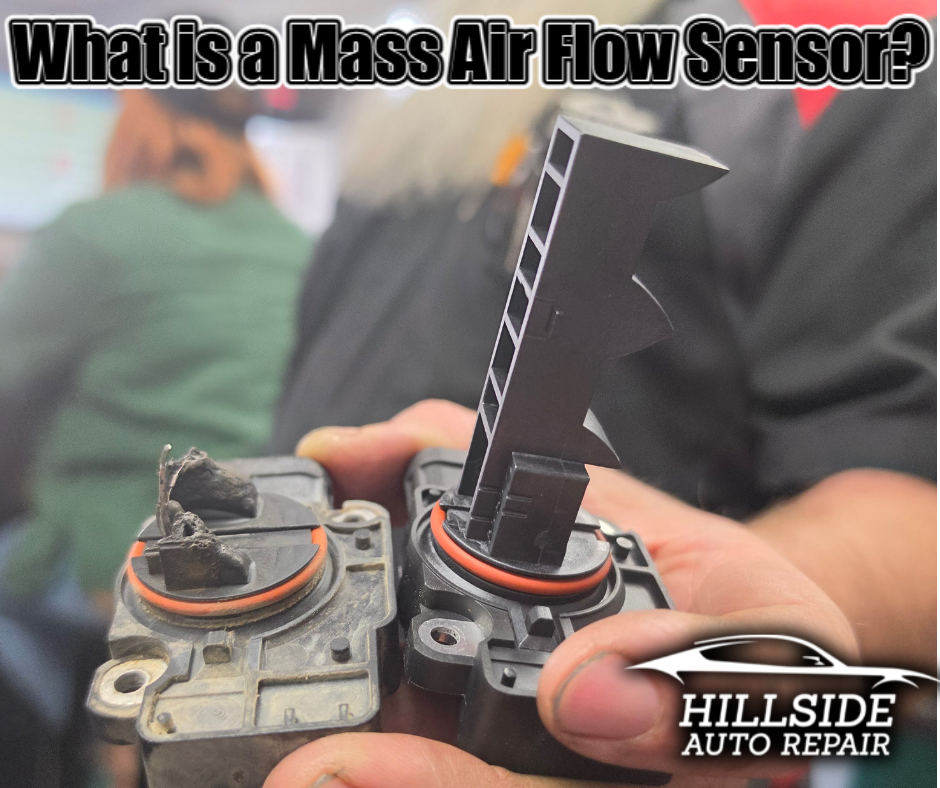
If you have spent any time peering under the hood of a modern vehicle, you have likely seen a small, intricate device lodged between the air filter box and the engine intake. It looks innocent enough, often no bigger than a thermostat. But in the world of automotive performance and fuel efficiency, this little component is also a part of your daily commute. We are talking about the Mass Air Flow (MAF) sensor.
Here in O’Fallon, Missouri, where our days can swing from humid summer heat to freezing winter winds in what feels like a single afternoon, your vehicle’s engine management system is constantly working overtime. At the heart of that system lies the MAF sensor. Let's talk about what this piece of technology does, how to tell when it is failing, and why a shop like Hillside Auto Repair is your best bet to get it sorted.
What is a Mass Air Flow Sensor?
In the simplest terms, the mass air flow sensor is the engine’s food critic. Before your engine can burn fuel (gasoline), it needs to know exactly how much air is coming to the party. The MAF sensor sits right after the air filter and measures the volume and density of air entering the engine. It then sends this data directly to the engine control unit (ECU), the car’s main computer.
The ECU uses this information to calculate the perfect air-fuel mixture. Too much air and not enough fuel? You run lean, which can cause overheating and detonation. Too much fuel and not enough air? You run rich, wasting gas and fouling up your spark plugs and catalytic converter. The MAF sensor ensures that perfect balance, known as the stoichiometric ratio, is achieved for a smooth, efficient, and powerful ride.
What Does It Do in the Vehicle?
Think of the MAF sensor as the conductor of an orchestra. Every time you press the gas pedal, you are not directly adding fuel; you are opening a throttle plate to let in more air. The MAF sensor immediately detects this rush of air, signals the computer, and the computer responds by delivering the precise amount of fuel needed.
This process happens hundreds of times per second. It dictates:
- Fuel Economy: When the MAF is accurate, you get the miles per gallon the manufacturer promised.
- Shift Timing: In automatic transmissions, the engine torque calculation (derived from the MAF) helps determine when to shift gears.
- Emissions: A proper air-fuel mixture ensures the catalytic converter can do its job of cleaning exhaust gases.
Symptoms of a Failing Mass Air Flow Sensor
When the MAF sensor starts to fail, it usually doesn’t do so silently. It throws a tantrum, and your car starts acting like it has a personality disorder. Here are the classic symptoms you will likely experience driving around the streets of O’Fallon, from Highway K to the backroads near Progress Park:
- Hesitation or Rough Idle
You step on the gas, and the car hesitates as if it is thinking about moving. Or worse, when you are sitting at a red light near the intersection of Bryan Road, the engine stumbles or feels like it is about to stall. This happens because the ECU is getting incorrect air readings and is sending the wrong amount of fuel.
- Poor Fuel Economy
If you find yourself visiting the gas station on Veterans Memorial Parkway more often than usual, a dirty or failing MAF sensor could be the culprit. If the sensor overestimates airflow, the computer dumps in extra fuel, turning your efficient commuter into a gas-guzzling beast.
- Check Engine Light
This is usually the first indicator. A failing MAF sensor will typically trigger diagnostic trouble codes like P0100, P0101, or P0102. While you can buy a code reader at a big-box store, the code alone doesn’t tell you if the sensor is dirty, shorted out, or if there is a vacuum leak elsewhere.
- Difficulty Starting
Because the engine relies on the MAF sensor to know how to set the fuel trim during startup, a faulty unit can leave you cranking the engine longer than usual before it finally fires up.
- Lack of Power During Acceleration
Trying to merge onto Highway 70 should not be a white-knuckle experience. A failing MAF sensor will often put the engine into "limp mode," a safe mode that reduces power to prevent potential damage.
Why You Need a Trusted Mechanic (No, This Isn’t a DIY Job)
We all love a good weekend project. But when it comes to the Mass Air Flow sensor, the internet is full of videos showing a five-minute fix involving a can of spray cleaner. While sometimes cleaning a MAF sensor works, it often leads to a false sense of security or, worse, permanent damage.
MAF sensors are incredibly delicate. The sensing elements are often thin wires or a heated film that can be destroyed by the wrong cleaner, a stray piece of debris, or even touching them with a finger. Moreover, modern vehicles have complex intake systems. What feels like a bad MAF sensor might actually be a vacuum leak, a faulty oxygen sensor, or a wiring issue that only a professional diagnostic tool can identify. This is exactly why you need The Professionals You Can Trust at Hillside Auto Repair.
We know the local roads and what they demand from your vehicle. At Hillside Auto Repair, we do not just guess and replace parts. We offer comprehensive auto repair services using the same tools and equipment that the dealership does. Our technicians are equipped to handle a wide range of repairs, from minor fixes like MAF sensor replacement to major engine overhauls. When you bring your car to us, we don’t just plug in a scanner and sell you a sensor. We perform a full system diagnostics to ensure that replacing the MAF sensor actually solves the issue. We also look at the rest of the vehicle’s health. Since a clean air filter is critical to protecting a new MAF sensor, we often recommend pairing this service with other system maintenance to ensure the problem doesn’t return a month later.
And because we stand behind our craftsmanship, every service we provide is backed by a 3-year / 36,000-mile warranty. You simply do not get that kind of peace of mind from a DIY job or a chain shop that cycles through technicians every few months.
Don’t let a faulty sensor ruin your fuel budget or leave you stranded. When it comes to the brains of your engine, trust the people who know how to treat them right.