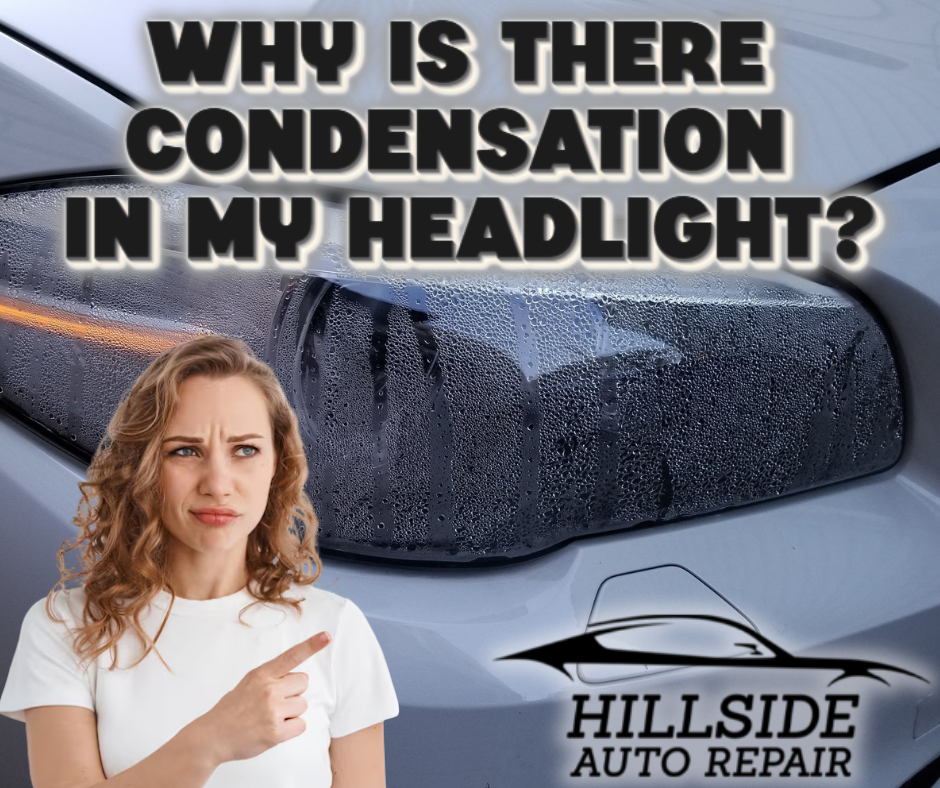
You're walking to your car after one of our classic O'Fallon weather swings, maybe a humid afternoon followed by a cool evening, and you see it. A faint fog, a few droplets, a mysterious cloudiness inside your headlight or taillight. Your first thought might be, "Did my car develop a cataract?" or "Is this a sign of major water damage?"
Take a deep breath. While it can be alarming, condensation inside light assemblies is a surprisingly common automotive quirk. But understanding why it happens and when it shifts from "quirk" to "problem" is key to keeping your vehicle safe and your lights shining bright on Highway K or I-64.
The Science of the Sweaty Headlight: It’s All About Breath
Modern headlights and taillights aren't sealed, vacuum-tight units. They're designed to breathe. Why? As bulbs heat up during use and cool down afterward, the air inside the assembly expands and contracts. To prevent pressure from building up and cracking the lens or housing, manufacturers install tiny breather vents. These allow moisture-laden air to escape when hot and, you guessed it, enter when things cool down.
This is where our O'Fallon climate comes into play. When you drive on a damp day, your headlights get warm. After you park in a cooler garage or the temperature drops at night, that warm, moist air inside cools rapidly. The moisture condenses, just like on a cold glass of sweet tea on a Missouri summer day, and forms droplets on the inside of the lens. Usually, this "normal" condensation is minor, appears at the bottom of the light, and should clear on its own within 15-30 minutes of turning your lights back on.
From "Normal Fog" to "Failed Seal": When It's a Problem
So, when should you be concerned? Here are the red flags:
- Large Water Droplets or Puddling: If you see actual pools of water sloshing around at the bottom, that's not condensation, that's a leak.
- It Doesn't Go Away: If the fog persists for days or through multiple driving cycles, the moisture isn't able to evaporate and escape.
- Mildew or Grime Buildup: Constant moisture leads to a filmy residue or even mold on the reflector, which drastically reduces light output.
- Visible Damage: A cracked lens, a missing or damaged seal around the housing, or a compromised gasket around the bulb access door is an open invitation for water.
A failed seal is the usual culprit. It can crack with age, be damaged during a minor bump, or simply degrade from years of Missouri sun and winter road treatments. This isn't just a cosmetic issue. Water can:
- Corrode electrical connectors and bulb sockets, leading to flickering or complete failure.
- Short-circuit wiring harnesses, creating a real safety hazard.
- Cause bulbs to burn out prematurely from the thermal shock.
- Severely dim your headlight output, making nighttime drives along 70 dangerously dark.
The Repair: It's Not Just a Towel and a Prayer
For minor, persistent condensation, a skilled technician might be able to revive the assembly. This often involves carefully removing the light, detaching the lens (if possible), thoroughly drying the interior with compressed air, cleaning the reflector, inspecting and replacing seals, and ensuring the breather vents are clear. It's a meticulous process.
However, if the housing is cracked, the reflector is corroded, or the seals are irreparably damaged, replacement is the only safe, reliable option. This is where expertise matters—proper alignment is critical for headlights, not just for your visibility but for the safety of oncoming drivers.
Why Your O'Fallon Repair Shop Choice Matters: Enter Hillside Auto Repair
This isn't a job for guesswork or duct tape. You need a shop that understands the intricate design of modern lighting systems and has the precision to fix them correctly. For O'Fallon drivers, that trusted expert is Hillside Auto Repair.
Our technicians are equipped with the same specialized tools and equipment the dealerships use, ensuring diagnostics and repairs meet exact manufacturer standards. Whether your condensation issue requires a meticulous resealing or a complete headlight assembly replacement, we offer comprehensive auto repair services to handle it, along with all your other system maintenance needs.
Most importantly, we stand behind our work with a robust 3-year/36,000-mile warranty on all services we provide. That means peace of mind knowing your repair is protected, long after the fog has cleared.
So, the next time you see that tell-tale haze in your headlight, you'll know what's happening. And if it looks more like an indoor swimming pool than a light fog, you know who to call. Trust your vehicle's vision, and your family's safety, to the experts at Hillside Auto Repair.